Archives
-
University Knowledge Infrastructure
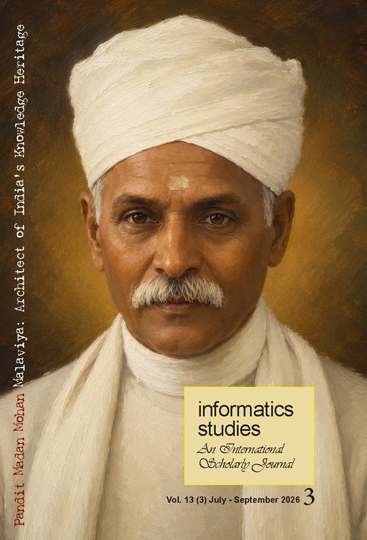
Vol. 13 No. 3 (2026)This issue explores the growing importance of knowledge management in higher education, reinterpreting educational philosophy within contemporary digital knowledge ecosystems. As universities evolve into integrated knowledge organizations, libraries have become strategic infrastructures supporting digital scholarship, artificial intelligence, research data management, institutional repositories, open science, and long-term knowledge preservation. The lead papers demonstrate how Malaviya's vision for Banaras Hindu University anticipated key principles of modern knowledge management by integrating intellectual heritage, scientific inquiry, libraries, ethical education, and national development. They emphasize that effective knowledge management, grounded in enduring educational values and strengthened by technological innovation, is essential for building resilient, inclusive, knowledge-driven universities. -
Sir David Frederick Attenborough: The Voice that Archived the Living Earth
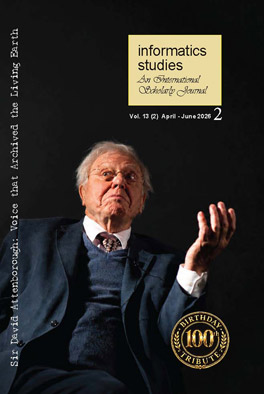
Vol. 13 No. 2 (2026)For more than seven decades, Attenborough has stood as humanity's most eloquent witness to the splendour and fragility of life on Earth. Through films, books, and public advocacy, he transformed broadcasting into a living archive of the planet's memory, revealing forests, oceans, deserts, wildlife, and endangered ecosystems with scientific rigour and profound compassion. More than a natural historian, he became a guardian of the living world, preserving for future generations the stories of species, habitats, and environmental change amid an age of accelerating biodiversity loss and climate crisis. His work awakened ecological consciousness across nations, opened environmental knowledge to all, and inspired millions toward conservation and stewardship. As we celebrate his hundredth year, we honour not merely a broadcaster but also one of the greatest chroniclers of Planet Earth and a timeless voice for the protection of life itself. -
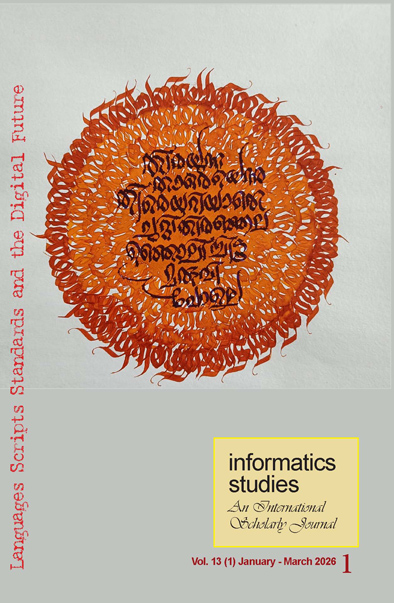
Language Technology
Vol. 13 No. 1 (2026)Language technologies are vital for preserving and accessing the world’s recorded knowledge. Over centuries, diverse languages, scripts, and manuscript traditions have documented intellectual and cultural heritage, enriching global knowledge while challenging modern computing systems. The Informatics Studies series on Language Technology explores this evolution, examining how knowledge recording practices intersect with the development of technologies for representing and processing multiple writing systems. -
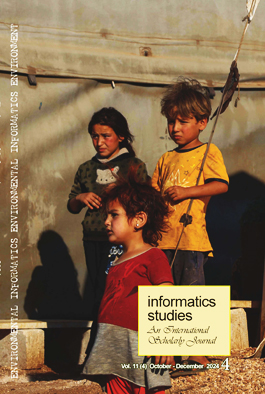
Environmental Informatics
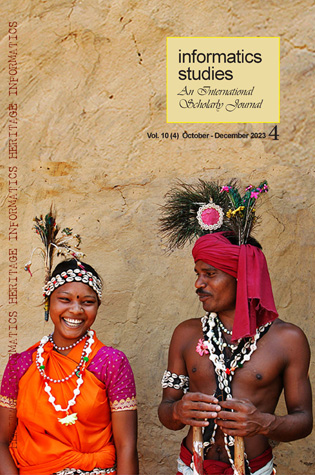
Vol. 11 No. 4 (2024)Every part of the earth, each shining pine needle, every sandy shore, the mist in the dark woods, the clearings, and the humming insects are all; sacred. The sap flowing through the trees carries the essence of life that existed here. We are intertwined with the earth, and the earth with us. The fragrant flowers are our sisters; the deer, the horses, and the mighty eagles our brothers. The sparkling water in streams is more than water; it is the blood of our ancestors. The air is precious, for all living things - animals, trees, and humans breathe the same air. The wind that gave our grandfather his first breath also carries his final sigh. The earth is our mother; whatever happens to the earth affects its children. The earth is not something man owns; rather, man belongs to the earth. Everything is connected, like the blood that links a family. Man did not create the web of life; he is just a single thread in it. Whatever he does to the web, he ultimately does to himself. - Chief of Seattle Tribe (1854)
-
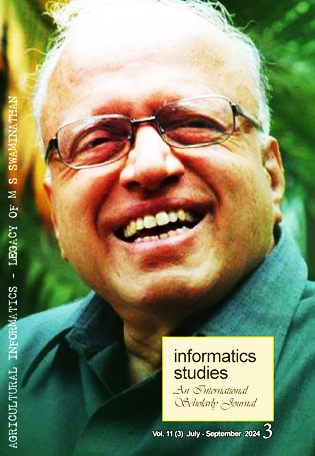
The Enduring Legacy of M.S. Swaminathan in Agriculture
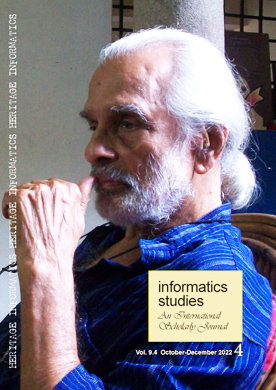
Vol. 11 No. 3 (2024)Dr. M. S. Swaminathan made a lasting impact on global agriculture, highlighting the crucial role of science and technology in addressing pressing issues. His dedication to research and development has transformed farming practices and tackled global food security challenges. Through his leadership in academia and international R&D organizations, he played a key role in shaping agricultural policies. He consistently advocated for the needs of smallholder farmers, the conservation of natural resources, and equitable food access. Recognizing the importance of informatics in solving grassroots problems, he stressed the need for technology, community engagement, and traditional knowledge systems to empower marginalized groups. As the world faces growing food security issues and environmental challenges, Dr. Swaminathan's legacy inspires us to use innovation and compassion to build a more sustainable future. (Edited by Pankaj Kumar Ojha0
-
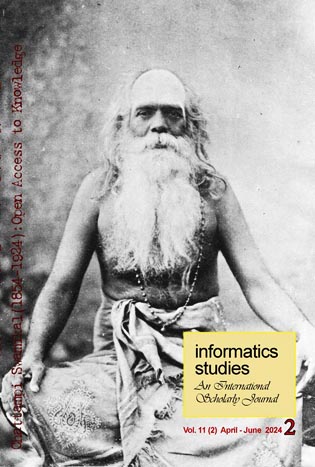
Chattampi Swamikal (1854-1924) & Open Access to Knowledge
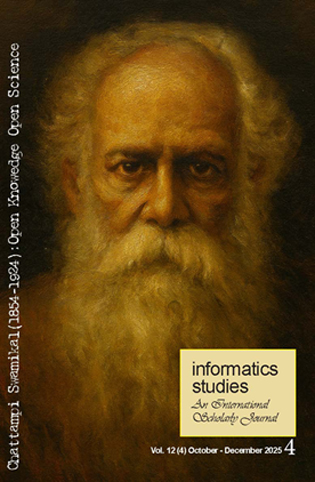
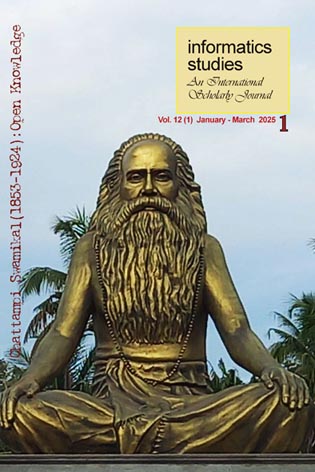
Vol. 11 No. 2 (2024)Chattapmi Swamikal (1854-1924): championed the idea that everyone, irrespective of his or her social status, deserved access to knowledge. He argued for equal educational opportunities, challenging the entrenched system of exclusion. He encouraged people to critically evaluate received knowledge, even the sacred texts. His advocacy of linking knowledge with empowerment, articulated a century ago, finds resonance today in movements like Open Access Initiatives, Open Science, and Open Knowledge. On his 100th Death Anniversary this journal pays tribute to Swamikal, whose vision for Open Access to Knowledge remains relevant a century later (Editor: Prof. Achuthsankar S Nair) -
Heritage Informatics
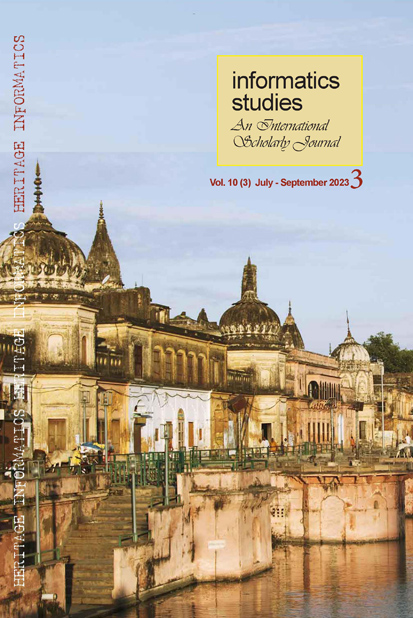
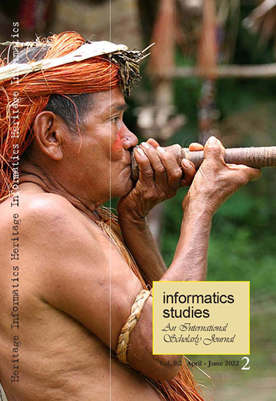
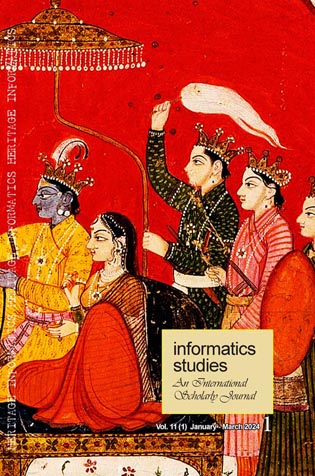
Vol. 11 No. 1 (2024)The city of Ayodhya in India the birthplace of Lord Rama has a history of over 3000 years. Referred in Ramayana, Mahabharata, Atharvaveda, and other ancient texts as an unconquerable city of gods is one of the most important pilgrimage sites for Hindus since time immemorial. Chinese, Greek and other European travellers have described it in its different periods of existence. There are thousands of recorded tellings and re-tellings of the epic Ramayana done in different countries and languages of the world during last 30 centuries. The tangible and Intangible heritage related to the city of Ayodhya and Ram Temple stand as a testament to India's great cultural tradition. After repeated destruction by invaders, rebuilding by native rulers and legal battles the site 2024 saw its final relcamation, which facilitates conservation of Intangible heritage of the site. But the fate of Tangible Heritage is still vague. there is an urgent need to consider Informatics and its AI driven technologies for identification and virtual reconstruction of Tangible Heritage of the site. (Editorial Note) -
Human Books and Digital Humans
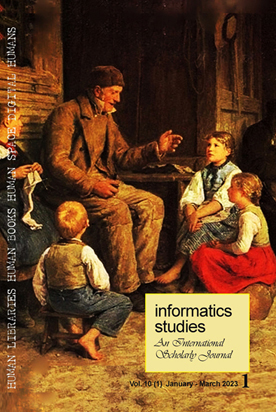
Vol. 10 No. 1 (2023)The human library is the latest entrant in knowledge transference. It is a space where human beings - instead of paper - hold content and are loaned to users. One can borrow human books -real people - with a specified time limit. Instead of content in paper or audio files here content is in humans. Users can have a face-to-face communication with human books in an environment and time comfortable to them with instantly customized content in an interactive mode. Informatics is attempting to create human books and human libraries in cyberspace with digital humans and knowledge bases, which can infinitely extend the possibilities of human space. Users can listen to human books, in real and virtual spaces, ask questions, get instant answers, enhance knowledge, experience classic stories and real adventures from heroes themselves, laugh with them and cry with them traveling through space and time. Human libraries and digital humans can transcend barriers - geographical, social, economic, and intellectual - to reach patients in hospital bed, old people at their homes, farmer in the fields or scientists in the labs thereby fulfilling the key missions put forward by UNESCO Public Library Manifesto better than any other system.
-
Marine Bioinformatics
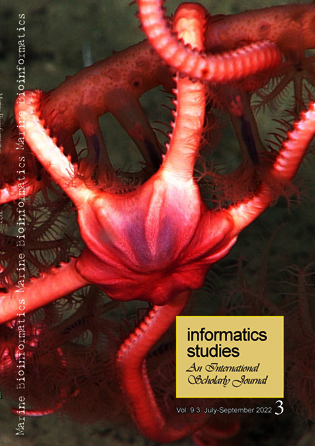
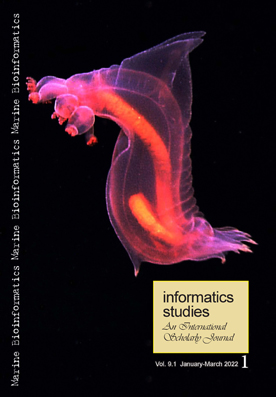
Vol. 9 No. 1 (2022)Papers that can help to advance our understanding of marine bioinformatics. Given the complex and cross-disciplines nature of the theme, The papers in the special issues on Marine Bio Informatics presents different approaches of research on the domain, through papers that provide broad theoretical insights and timely practical guidance.
-
Informatics Studies
Vol. 1 No. 1 (2014)Informatics Studies a journal promoted by Centre for Informatics Research and Development is a media for discussing the emerging trends in theory and application of Information Science. The journal will focus on – Information Infrastructures, Knowledge Management, Institutional Repositories, Digital Library/Archive, Cloud Computing Solutions for Libraries, Unicode, Multi-linguality and Interoperability Issues, Thesauri and Ontologies, Semantics, Metadata and Retrieval, Resources Discovery Solutions, Online Resources Usability Issues, Open Access Initiatives, OAI –PMH, MARC 21, Consortia, IPR, Information Literacy, Training and education of Professionals, Performance Measurement and Metrics, Setting Service Quality Standards etc