The Earth We Share: Nature, Responsibility, and the Future of Humanity
Keywords:
Climate Change, Biodiversity Conservation, David Attenborough, Barack Obama, Environmental Education, Renewable Energy, Sustainable Development, Population Growth, National Parks, Nature and Society, Ecological Resilience, Environmental Stewardship, GlobAbstract
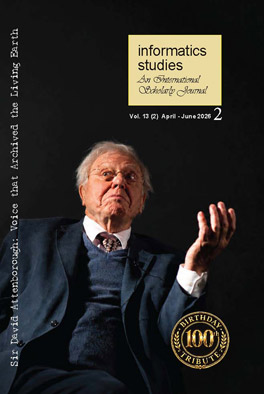
This article, adapted from a conversation between David Attenborough and Barack Obama, explores contemporary environmental challenges and opportunities. Topics include climate change, coral reef conservation, renewable energy, biodiversity protection, population growth, environmental education, national parks, and humanity's evolving relationship with nature. The discussion highlights the resilience of natural systems, the importance of international cooperation, and the role of education and public awareness in fostering environmental stewardship. While acknowledging the seriousness of current ecological crises, the dialogue presents a hopeful vision grounded in scientific understanding, technological innovation, and a renewed sense of responsibility toward future generations.
Keywords
References
Obhama White House (2015). Sir David Attenborough and President Obama: The Full Interview. 11 July, 2025
The video file of the discussion between David Attenborough and Barack Obama forming part of Obama Administration is maintained by the National Archives and Records Administration (NARA), which serve as an archive of Obama Administration also. File access: . https://youtu.be/NZtJ2ZGyvBI.
This article is adapted from the transcript of the above video file (Obhama White House, 2015) which is a work of an employee of the Executive Office of the President of the United States, taken or made as part of that person's official duties. As a work of the U.S. federal government, it is in the public domain.
Authors are not responsible for any mistake that occured during teh transcription.
Downloads
Published
Issue
Section
License
Submission of a manuscript to IS indicates that the work is original, has not been previously published (except as an abstract, lecture, or thesis), and is not under consideration by another journal. By submitting, authors affirm that their manuscript meets the journal’s ethical and editorial standards and that they agree to the terms of copyright and licensing upon acceptance.
Once accepted for publication, authors grant IS the first publication rights to the work. However, authors retain full copyright of their content and remain the legal owners of their intellectual property.
IS provides open access to all published articles six months after the release of the respective volume. Once the embargo period concludes, articles are made freely available under the Creative Commons Attribution (CC BY) License (https://creativecommons.org/licenses/by/4.0/). This license allows users to share, adapt, and reuse the work in any medium or format provided that appropriate credit is given to the original authors and the initial publication in this journal.
The journal's delayed open access model supports global knowledge dissemination, ensuring that research is accessible without financial or legal barriers. Authors are also encouraged to archive their published articles in institutional repositories, personal websites, or other platforms, with full citation of the journal version. Pre-print versions posted online should include a citation and link to the final published version in IS as soon as the issue is available; post-print versions (including the final publisher's PDF) should include a citation and link to the journal's website.
All materials published in the IS website are distributed under a Creative Commons Attribution license, unless otherwise noted.