Promoting Intangible Heritage Among Tribals for Peace and Identity in Conflict Zones Using ICT: A Case Study of Bastar
Keywords:
Intangible Heritage, Conflict Zones, Peace Promotion, Heritage, Culture, Empowerment, InformaticsAbstract
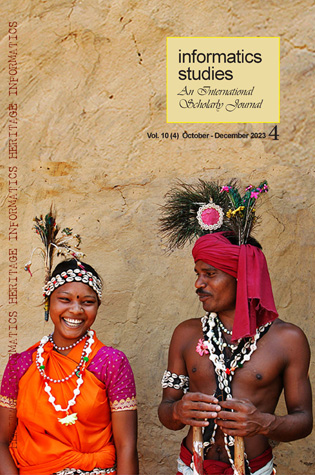
The paper explores the role of intangible heritage in promoting peace and identity in conflict zones. It aims to present an alternative approach to conflict reduction by focusing creating awareness on the cultural traditions and their global recognition in such regions and on the development of new opportunities for promoting intangible cultural practises and traditions in conflict zones. The study reveal that recognising intangible heritage not only protects cultural diversity but also empowers individuals, contributing to a broad recognition and thorough understanding of conflict zones facilitating peaceful coexistence. The traditional emphasis on tangible property is replaced here with a focus on intangible cultural practises and traditions. It also explores how by leveraging tools and techniques provided by Informatics knowledge on intangible heritages can be documented, conserved and kept in the minds of tribes live making them proud of their heritage and keep them away from negatives influences that interest group try to infuse on them with ulterior motives. This can remove the conflicts in the region and achieve peace.
References
Bastar Dusshera Attraction (2013) available at: https://explore-Bastar Talkies. (n.d.). Home [YouTube channel]. From. https://www.youtube.com/c/BastarTalkies
Chhattisgarh (2023). Chhattisgarh. Tourism Website. blogspot.com/2013/04/bastar-dussehra-jagdalpur-danteshwari.html
Gautham Kumar Bera . The Dussehra Festival of Bastar: Understanding Secularisation and Universalization, Oriental Anthropologist: A Bi-annual International Journal of the Science of Man. 7 (2).
Jha, J P and Ravi Raj (2015) Bastar Dussehra (Hindi). Nichod Magazine: November 2015.
Kulke, H (1984). Tribal deities at princely courts: the feudatory rajas of central Orissa and their tutelary deities. In Folkways in religion: gods, spirits and men (ed.) S Mahapatra. Cuttack: Institute of Oriental & Orissan Studies.
Nandini Sunder (2001). Debating Dussehra and reinterpreting rebellion in Bastar District, Central India. Journal of the Royal Anthropological Institute · March 2001.
Rashmi Drolia (2022) City News/Raipur News, Times of India 26 September
Rupendra Kavi (2015). Study of Bastar Dussehra (Monograph). Guide: Dr. T. Radhakrishnan. Raipur, Tribal Research & Training Institute. https://repository.tribal.gov.in/upload/handle/123456789/61787
Sinha Roy, K.M., Rajesh Roshan and Vijay Kumar (2019). Bastar Dussehra: A Unique Cultural Heritage. Kolkata: Bookwell and Anthropological Survey of India,
Sinha Roy, K.M;, Rajesh Roshan and Vijay Kumar (2021). Bastar Dussehra: A Unique Cultural Heritage. Journal of Anthropological survey of India. 70 (1).
South Asia Terriosim Portal (SATP) available at: [https://www.satp.org/]
Sunder, N (1994). In search of Gunda Dhur. Colonialism and contestation in Bastar, Central India (1854-1993). Thesis, Columbia University
Wikipedia (2023). Bastar Dussehra (Wikipedia) :https://en.wikipedia.org/wiki/Bastar_Dussehra
Downloads
Published
Issue
Section
License
Submission of a manuscript to IS indicates that the work is original, has not been previously published (except as an abstract, lecture, or thesis), and is not under consideration by another journal. By submitting, authors affirm that their manuscript meets the journal’s ethical and editorial standards and that they agree to the terms of copyright and licensing upon acceptance.
Once accepted for publication, authors grant IS the first publication rights to the work. However, authors retain full copyright of their content and remain the legal owners of their intellectual property.
IS provides open access to all published articles six months after the release of the respective volume. Once the embargo period concludes, articles are made freely available under the Creative Commons Attribution (CC BY) License (https://creativecommons.org/licenses/by/4.0/). This license allows users to share, adapt, and reuse the work in any medium or format provided that appropriate credit is given to the original authors and the initial publication in this journal.
The journal's delayed open access model supports global knowledge dissemination, ensuring that research is accessible without financial or legal barriers. Authors are also encouraged to archive their published articles in institutional repositories, personal websites, or other platforms, with full citation of the journal version. Pre-print versions posted online should include a citation and link to the final published version in IS as soon as the issue is available; post-print versions (including the final publisher's PDF) should include a citation and link to the journal's website.
All materials published in the IS website are distributed under a Creative Commons Attribution license, unless otherwise noted.